Stop-Start Duty
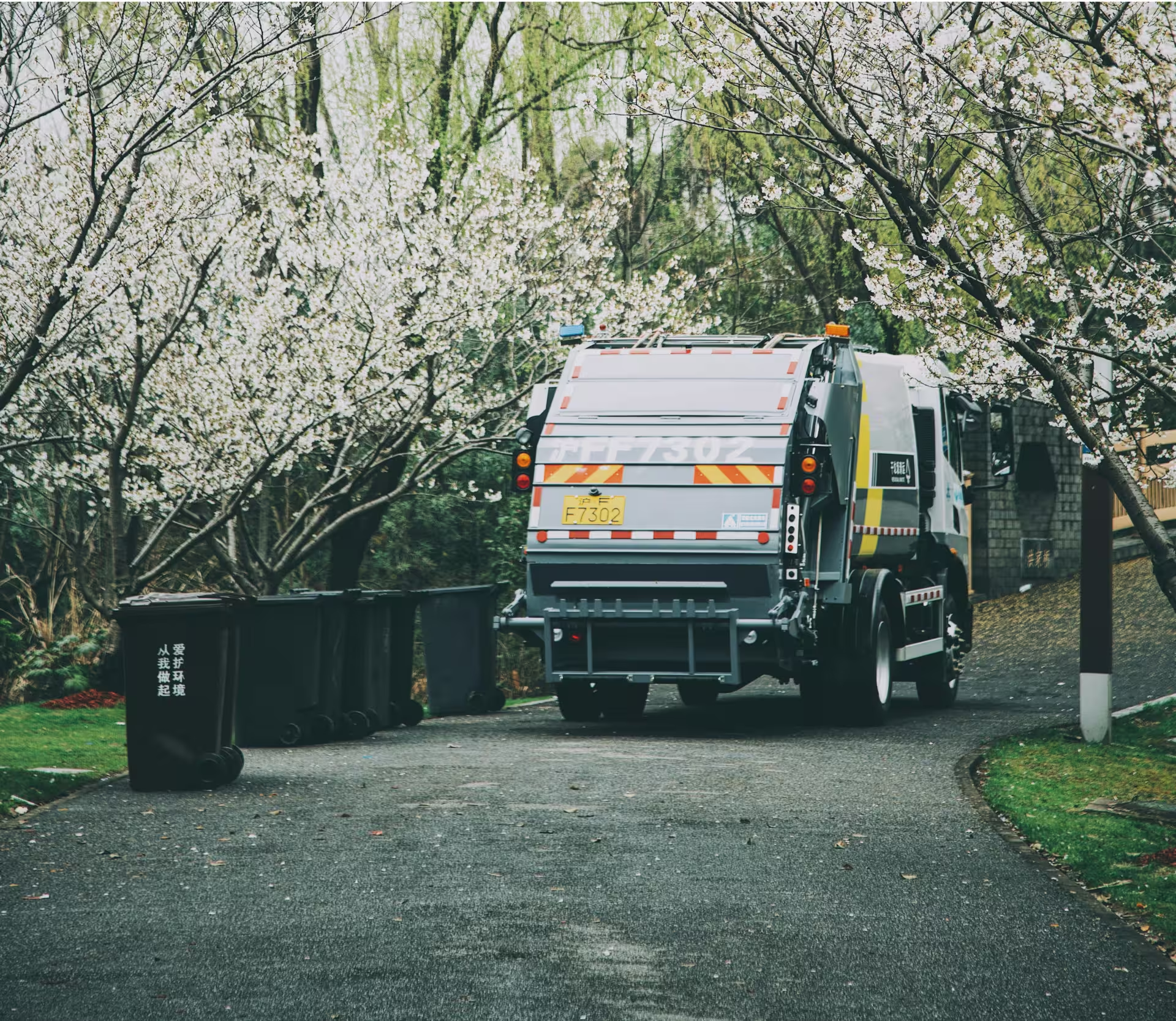
Repeated starts, idling, acceleration and low-speed work change engine loading, thermal conditions and service demand across municipal routes.
DIRECT ANSWER
Municipal filtration has to account for the vehicle mission as well as the engine. Repeated stop-start duty, idling, urban dust, refuse debris, auxiliary hydraulics and route schedules change which systems are critical and how service should be planned.
ROUTE OPERATING REALITY
Waste collection, sweeping, sewer service and public works combine road travel with stationary or low-speed work. That operating pattern creates a filtration problem that is different from conventional highway duty.
Repeated starts, idling, acceleration and low-speed work change engine loading, thermal conditions and service demand across municipal routes.
Street dust, refuse particulate and debris can increase contamination exposure around air intake, cooling and service interfaces.
Compactors, lifters, sweepers, booms and auxiliary functions depend on pumps, valves and actuators operating with controlled fluid cleanliness.
Public-service fleets work to fixed collection, sanitation and maintenance schedules, so an unavailable vehicle can create an immediate operational gap.
PUBLIC-SERVICE ASSETS
A refuse truck, street sweeper and vacuum truck may share a municipal depot while relying on very different auxiliary systems and contamination-control priorities.
CONTAMINATION PATHWAYS
Selection should connect the contamination source to the protected system, then to the appropriate ELIMFILTERS technology and finally to a validated part.
Street particulate + refuse dust + service ingress
Ingress + internal wear + repeated auxiliary actuation
Storage + transfer + condensation + municipal fueling
Wear debris + soot + stop-start engine duty
Do not standardize a filter simply because vehicles share a fleet class. Resolve the vehicle, engine, auxiliary equipment, contamination path, duty profile and application evidence before assigning the part.
A refuse truck or emergency vehicle that is out of service is a gap in a service the public depends on every day. ELIMFILTERS® systems are built for the stop-and-go duty cycles, dust, and debris exposure that define municipal fleet work, protecting engines and drivetrains through 24/7 service demand. Our distributor network keeps municipal and public works fleets supplied with the protection systems they need to stay in service.
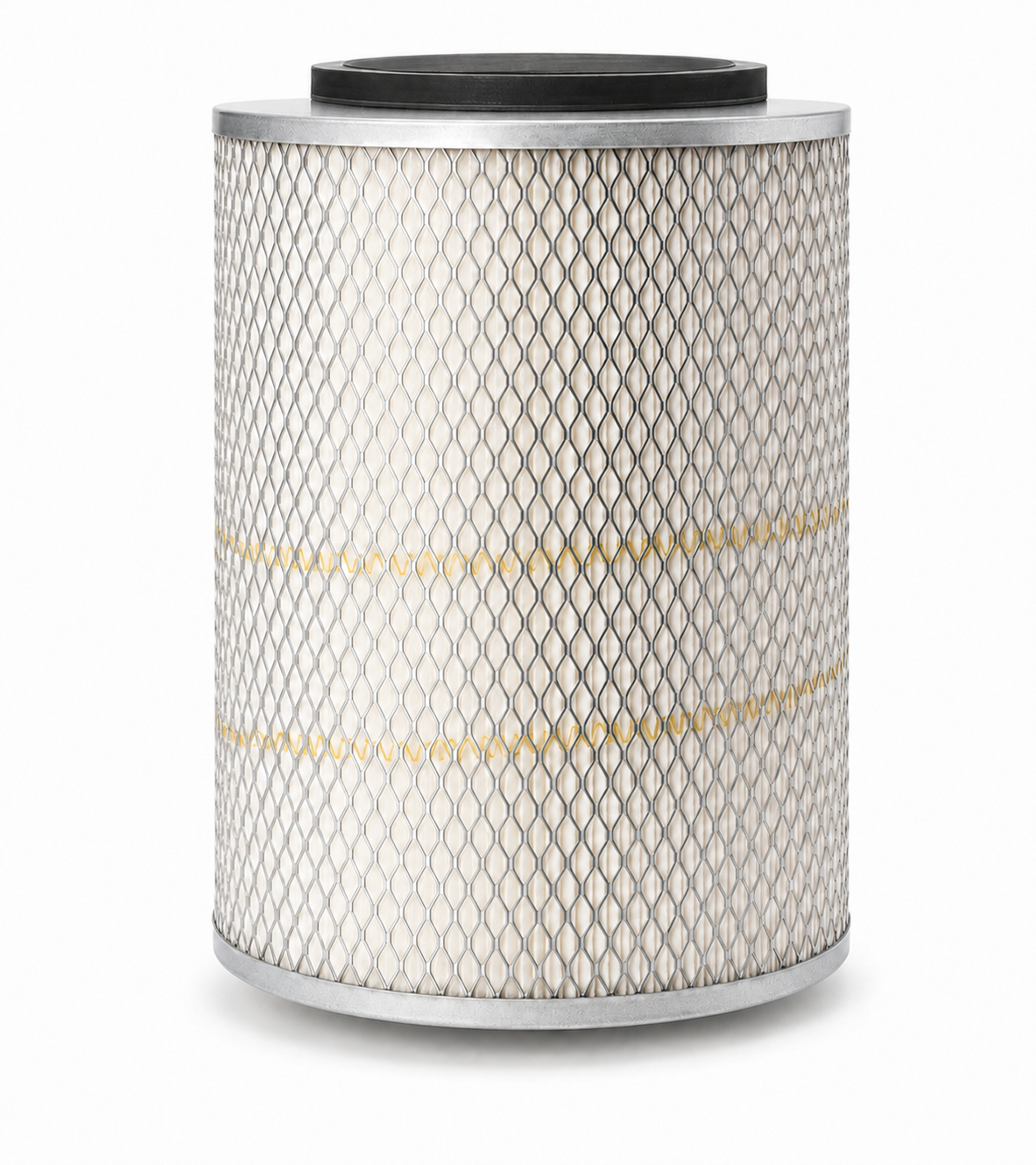
Primary air elements are the main contamination barrier protecting the combustion chamber from particulate ingestion. MACROCORE™ progressive-density media distributes contaminant loading through the full media depth while balancing efficiency, capacity, and restriction.
View Primary Air →PUBLIC-SERVICE AVAILABILITY
Municipal fleet availability is operationally visible. Filtration supports the engine, hydraulic functions and service planning around vehicles that must return to scheduled work.
Vehicle availability directly affects whether collection, sweeping, utility or public-works schedules can be completed as planned.
Auxiliary hydraulic circuits support lifting, compacting, sweeping, vacuum and utility operations that define the vehicle mission.
Air, fuel and lubrication cleanliness protect engine interfaces exposed to repeated urban duty and environmental contamination.
Fleet maintenance often has to align parts, labor and vehicle availability with route schedules and depot capacity.
Common platforms can support standardized service only when application compatibility is confirmed by engine, system and configuration.
A contamination-control strategy supports predictable fleet readiness across services that municipalities are expected to deliver consistently.
FROM ROUTE DUTY TO PART
Identify the refuse truck, sweeper, vacuum truck, utility vehicle or public-works equipment.
Define collection, sweeping, sewer, utility or support duty and the auxiliary equipment used.
Document dust, debris, fuel condition, idle time, hydraulic work and route environment.
Map the exposure to engine, fuel, lubrication, hydraulic, cooling, compressed-air or cabin protection.
Validate the final filter using OEM reference, dimensions, configuration and documented application evidence.
FLEET APPLICATION EVIDENCE
A municipal fleet may contain similar-looking vehicles with different engines, hydraulic circuits, brake systems or filter specifications. Final identification should reconcile the known reference, vehicle configuration, dimensions and protected system before one SKU is standardized across multiple assets.
WASTE & MUNICIPAL FILTRATION QUESTIONS
Air intake, fuel-water separation, lubrication, hydraulic, cooling, compressed-air and cabin filtration can all be relevant depending on the vehicle and mission. Refuse trucks and public-works equipment often combine engine protection with hydraulic and auxiliary-system demands.
Municipal vehicles frequently operate with repeated starts, idling, low-speed work, urban dust, debris exposure and auxiliary hydraulic loads. Filter selection should reflect the actual route, vehicle configuration and protected system rather than highway mileage alone.
Compactors, lifters, sweepers, booms, vacuum systems and other auxiliary functions depend on hydraulic pumps, valves and actuators. Contamination can interfere with those precision interfaces and affect the vehicle mission even when the engine remains operational.
Water and particulate can enter fuel through storage, condensation, transfer and handling. Because municipal fleets may refuel repeatedly from centralized infrastructure, the fuel path from storage to the engine should be considered as part of the protection strategy.
No. Mileage alone does not capture idle time, stop-start cycles, hydraulic use, dust exposure, fuel condition, route severity or maintenance access. Service planning should reflect the actual duty profile.
Yes, but only where the engine, protected system, filter dimensions, specification and application evidence confirm compatibility. Vehicle appearance or shared fleet class is not enough to assume one filter fits every configuration.
Use the vehicle or equipment model, engine, protected system, route duty, auxiliary equipment, known OEM or current filter reference, dimensions when available and validated application evidence.
Yes. If an OEM reference or current filter number is known, Part Search is the fastest route to cross-reference and application information. For fleet standardization or difficult applications, include the vehicle, engine, protected system and operating duty.
NEED TO RESOLVE A MUNICIPAL FLEET APPLICATION?
Send the vehicle, engine, auxiliary equipment, protected system, route duty and any known OEM or filter reference.
IDENTIFY MY MUNICIPAL PROTECTION PATH