Long-Haul
High annual mileage, extended engine runtime and route dependence make service planning and parts consistency central to fleet availability.
DIRECT ANSWER
The correct strategy resolves the vehicle and engine, protected system, route and duty profile, contamination exposure, service plan and validated application evidence. A fleet should not standardize a filter only because a cross-reference looks plausible or because two trucks appear similar.
FLEET OPERATING MODEL
A highway tractor, regional delivery truck and vocational unit can share an engine family while experiencing very different dust, fuel, idle, thermal and service conditions.
High annual mileage, extended engine runtime and route dependence make service planning and parts consistency central to fleet availability.
Repeated delivery cycles, changing road conditions and frequent starts place different demands on fuel, lubrication, cooling and air systems.
Construction support, refuse, utility and severe-duty work can add dust, hydraulic demand, idling and contamination exposure beyond normal highway duty.
Different makes, engines and duty profiles increase the value of disciplined cross-reference, application evidence and fleet-wide part standardization.
FLEET APPLICATIONS
Fleet consistency starts by identifying which assets can truly share a protection path and which require application-specific parts.
PROTECTION PATHWAYS
The selection path should move from operating exposure to protected system, then to the appropriate ELIMFILTERS technology and finally to a validated filter.
Highway + terminal + yard + vocational exposure
Bulk storage + transfer + condensation + refueling
Wear debris + soot + service ingress
Coolant condition + deposits + service contamination
Air-brake pneumatic system moisture + contaminants
Road dust + urban particulate + outside air intake
Standardize only after the application is validated. The goal is fewer ambiguous parts across the fleet, not one part forced across incompatible configurations.
Truck fleets depend on consistent service decisions across long-haul, regional and vocational duty. ELIMFILTERS® filtration systems support air intake, fuel, lubrication, cooling, compressed-air, cabin and applicable hydraulic protection while keeping product selection tied to the vehicle, engine, duty profile and validated application evidence. Fleet standardization should follow confirmed compatibility rather than assumed cross-reference equivalence.
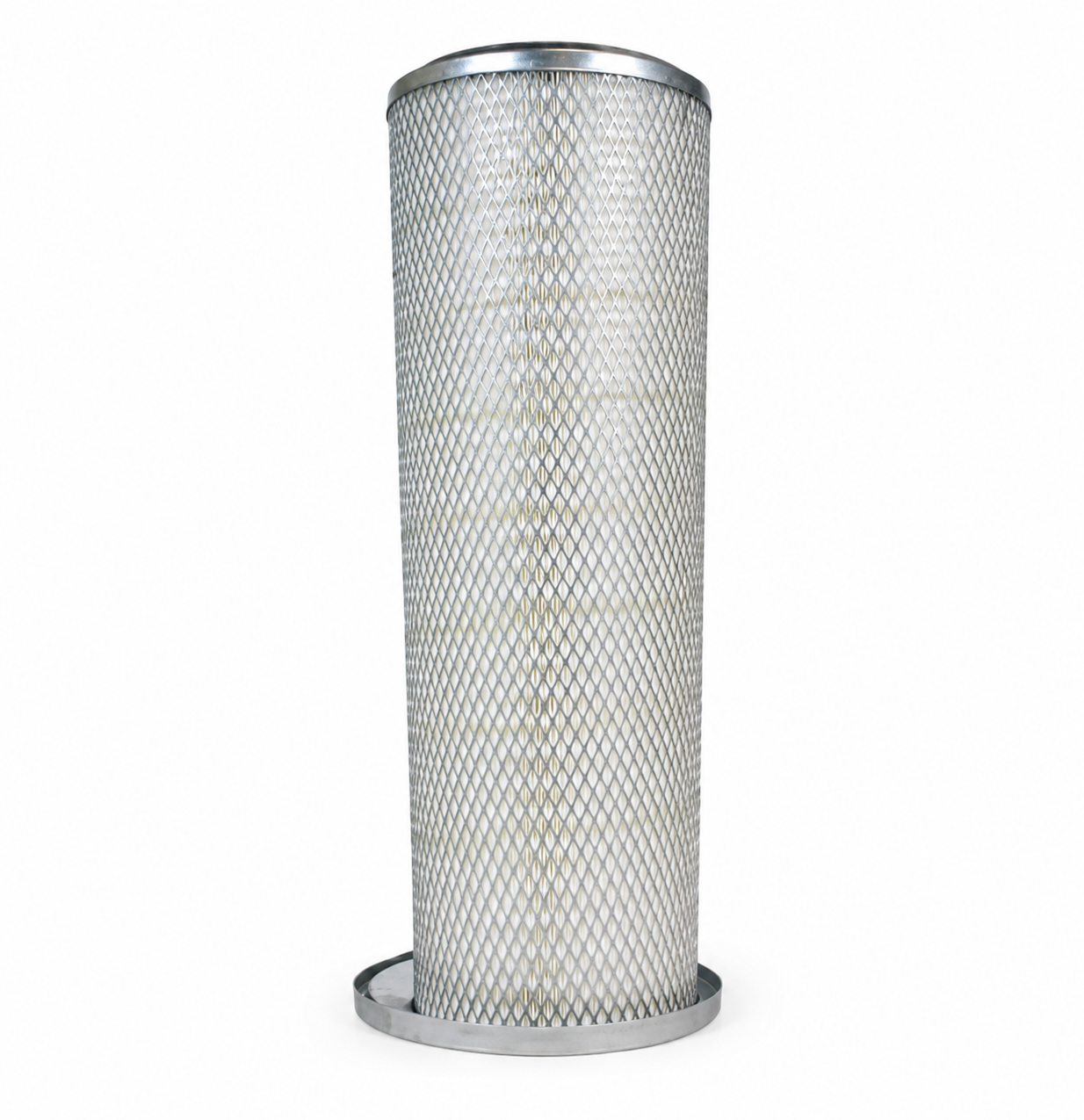
Primary air elements are the main contamination barrier protecting the combustion chamber from particulate ingestion. MACROCORE™ progressive-density media distributes contaminant loading through the full media depth while balancing efficiency, capacity, and restriction.
View Primary Air →ROUTE AVAILABILITY
Fleet filtration affects more than component protection. It influences service consistency, parts readiness and how confidently maintenance teams can release a truck back to operation.
A filtration-related service event can remove a truck from a planned route and create replacement, rescheduling or recovery work.
A governed application path helps maintenance teams reduce ambiguity across makes, engines, duty profiles and replacement references.
Fuel cleanliness and water control matter across bulk storage, transfer and final engine supply, not only at the filter head.
Filtration decisions should support planned maintenance around actual duty and contamination exposure rather than a generic interval alone.
Cabin filtration supports particulate control at the operator air intake without being confused with engine air filtration.
Validated references and fleet-level application evidence reduce the risk of selecting a plausible but incorrect replacement during service.
FROM FLEET UNIT TO PART
Identify the truck, engine and relevant configuration before treating two units as equivalent.
Define long-haul, regional, vocational or mixed use, including idle time, dust and route environment.
Resolve air intake, fuel, lubrication, cooling, compressed air, cabin air or vocational hydraulic protection.
Determine whether the validated application can be safely standardized across additional fleet units.
Confirm the final part using OEM/current reference, dimensions where needed and documented application evidence.
APPLICATION EVIDENCE
Final fleet standardization should reconcile the known reference with the truck or engine context, protected system and application evidence. If the evidence does not support equivalence, the units should remain separate in the fleet parts plan.
TRUCK FLEET FILTRATION QUESTIONS
Air intake, fuel and water separation, lubrication, cooling, compressed-air and cabin-air filtration are common priorities. Some vocational applications also use hydraulic filtration. The correct mix depends on vehicle configuration, engine, duty cycle, environment and protected system.
Long-haul fleets emphasize route uptime and extended runtime, regional fleets see more repeated starts and delivery cycles, and vocational trucks may add dust, idling, hydraulic demand and severe-duty exposure. Filter selection should reflect the actual duty profile rather than the truck category alone.
Fuel can acquire water or particulate during bulk storage, tank breathing, condensation, transfer and refueling. A fleet protection strategy should therefore consider the full path from storage to the engine, not only the final filter position.
No. Mileage and hours are useful maintenance inputs, but they do not describe fuel quality, dust exposure, idling, loading, cooling demand, sealing condition or route environment. Selection and service planning should reflect the application and operating conditions.
Use a governed cross-reference process that combines the known OEM or current filter reference with vehicle, engine, protected system, dimensions where needed and validated application evidence before standardizing a replacement across the fleet.
Use the truck make and model, engine, year or configuration when available, protected system, duty cycle, known OEM or current filter number, dimensions where needed and validated application evidence.
If a known OEM or current filter reference is available, Part Search is the fastest route to cross-reference and application information. Final confirmation should still reconcile the vehicle or engine context and protected system.
NEED TO STANDARDIZE OR RESOLVE A FLEET APPLICATION?
Send the truck or fleet unit, engine, protected system, duty profile and any known OEM or current filter reference.
IDENTIFY MY FLEET PROTECTION PATH