Heat-transfer exposure
Deposits on heat-transfer surfaces or restriction inside cooling passages can reduce the system margin available to reject heat under sustained duty.
FILTRATION TECHNOLOGY
Coolant & Cooling-System Filtration
A cooling-system protection architecture for coolant cleanliness and component protection in approved engine and equipment applications.
DESCRIPTION
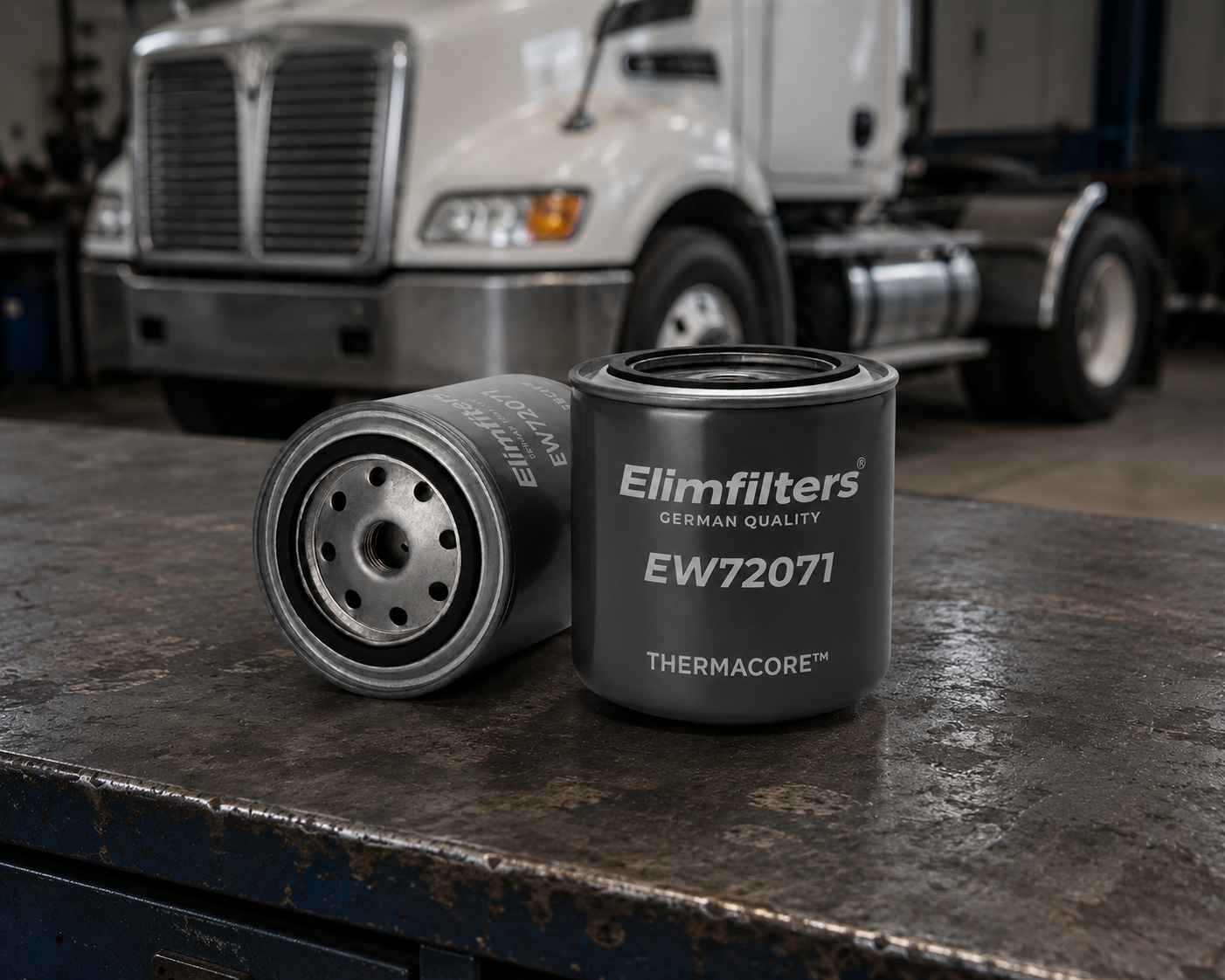
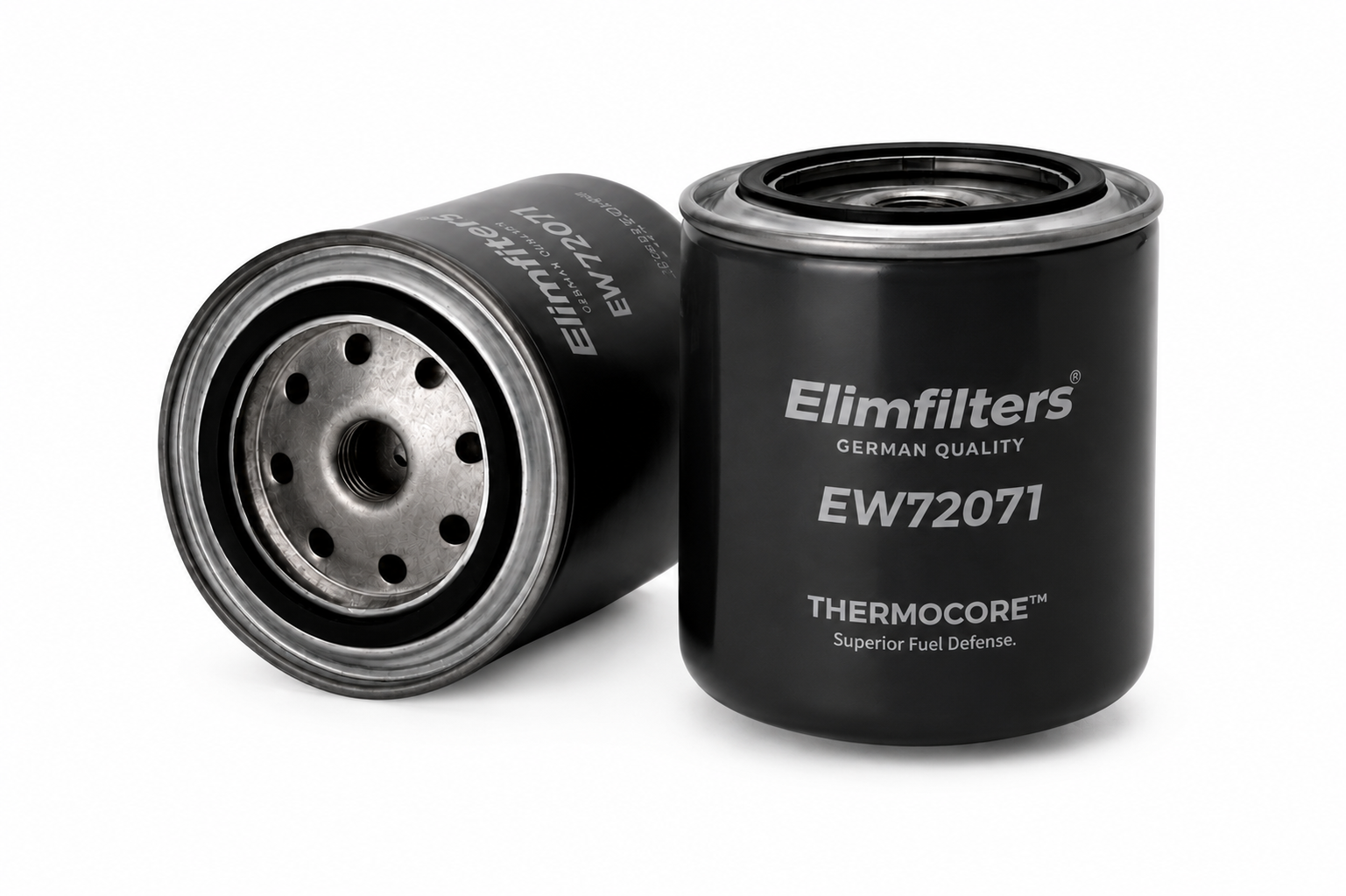
THERMACORE™ is the ELIMFILTERS cooling-system protection architecture for coolant cleanliness and component protection within Cooling System Protection.
Its engineering role is to support cleanliness of coolant passages, seals and heat-transfer surfaces within the approved cooling-system maintenance strategy. Filter chemistry, capacity, flow and service interval must be matched to the engine and coolant requirements.
Coolant filtration is one part of the system. Correct coolant formulation, chemistry compatibility, maintenance practice and the condition of the complete cooling circuit remain essential to thermal-system reliability.
OPERATING REALITY
Corrosion products, scale-related debris and suspended contamination can affect passages, seals and heat-transfer surfaces. Coolant chemistry and system condition must be managed together because filtration alone cannot correct an incompatible or degraded coolant formulation.
Deposits on heat-transfer surfaces or restriction inside cooling passages can reduce the system margin available to reject heat under sustained duty.
Contaminated or chemically incorrect coolant can contribute to corrosion, seal distress and wear at water-pump and other cooling-system interfaces.
APPLICATION ENVIRONMENT
SPECIFICATION & SELECTION
Known part number? Use Part Search. Coolant chemistry, contamination or repeated thermal problem? Use technical review.
HOW THE SYSTEM BEHAVES
A useful cooling-system filtration strategy must preserve the required coolant flow while supporting cleanliness and the approved chemistry strategy. A filter cannot compensate for wrong coolant, incompatible additives, damaged heat exchangers or another system-level fault.
Where the approved product is a blank coolant filter, its role is filtration without assuming an additive charge.
Where an approved product contains supplemental chemistry, type, quantity and service strategy must be supported by validated product data and engine requirements.
SERVICE & DIAGNOSIS
Repeated contamination, deposits or thermal instability justify reviewing the complete cooling circuit and coolant-maintenance strategy.
REQUEST COOLING SYSTEM REVIEWQUESTIONS FROM THE FIELD
THERMACORE™ is the ELIMFILTERS cooling-system protection architecture for coolant cleanliness and component protection in approved engine and equipment cooling applications.
A correctly specified coolant-filtration stage supports cleanliness of coolant passages, heat-transfer surfaces, seals and other protected cooling-system components. The complete protection strategy also depends on coolant chemistry and maintenance practice.
No. Additive-containing and blank coolant filters are different product configurations. Additive content or release rate must be confirmed from validated product and application data.
Deposits, corrosion products and suspended contamination can affect heat-transfer surfaces or restrict passages. Temperature problems still require diagnosis of the complete cooling system rather than assuming the filter is the sole cause.
Yes. Coolant formulation, inhibitor condition and compatibility matter. Mixing incompatible chemistries or using fluid outside the engine requirements can contribute to deposits, corrosion and material compatibility problems.
No. Filtration can support cleanliness and, where specifically designed, additive management, but it cannot make an incorrect or incompatible coolant formulation acceptable.
Engine or equipment identification, coolant specification, current filter and housing, filter configuration, service interval, operating duty and any history of corrosion, deposits, overheating or water-pump events are useful inputs.
TECHNICAL BASIS
Filter chemistry, additive content, capacity, flow capability, pressure drop, service interval and compatibility must remain tied to validated product data and the requirements of the approved engine and coolant system.
THERMACORE™ is not assigned one universal micron rating, coolant chemistry specification, additive dose, pressure rating, capacity or service interval across every application.
WHEN A TECHNICAL REVIEW MAKES SENSE
Recurring corrosion, deposits, shortened filter intervals, unknown coolant chemistry, water-pump events or temperature instability justify reviewing coolant condition, filtration duty, heat-transfer hardware and maintenance history as one system.
SYSTEM INTEGRATION
THERMACORE™ provides the coolant-cleanliness and component-protection layer of ELIMFILTERS Cooling System Protection.
EXPLORE PROTECTION SYSTEMFinal selection resolves engine requirements, coolant chemistry, filter capacity, system flow, service interval and validated product evidence. THERMACORE™ remains separate from lubrication, hydraulic and fuel-system technologies.
APPLICATION SUPPORT
Use Part Search when the application is known. For recurring contamination, chemistry uncertainty, deposits, thermal instability or an unclear coolant-filter configuration, use technical review.
EXPLORE RELATED TECHNOLOGIES