Extended Duty
Rail equipment can accumulate long operating hours across variable routes, loads and ambient conditions, making contamination control part of availability planning.
DIRECT ANSWER
Railway filtration should start with the locomotive or rail asset, engine and protected system, then resolve route exposure, fuel handling, duty cycle, maintenance window and validated application evidence. Similar locomotive classes should not be treated as interchangeable without confirming the actual filter position and application.
RAIL OPERATING REALITY
Rail assets combine long operating periods with vibration, changing ambient conditions, depot fuel handling and scheduled service events. Filtration decisions have to fit that operating rhythm.
Rail equipment can accumulate long operating hours across variable routes, loads and ambient conditions, making contamination control part of availability planning.
Repeated vibration and changing temperatures influence sealing, fluid condition, intake loading and service interfaces across locomotive systems.
Bulk storage, transfer, condensation and depot refueling can introduce particulate or water before fuel reaches the engine.
Locomotive service is often coordinated around depot access and scheduled maintenance windows, so application evidence must be resolved before the asset is released to service.
Freight, passenger, maintenance and auxiliary equipment can share depots while using different engines, protected systems and service requirements.
CONTAMINATION PATHWAYS
Railway selection should connect the contamination source to the protected system, then to the appropriate ELIMFILTERS technology and finally to a validated application.
Route dust + ballast particulate + intake loading
Bulk storage + transfer + condensation + depot refueling
Wear debris + soot + service ingress
Wear + service contamination in applicable auxiliary and support systems
The correct railway filter must resolve the locomotive or asset, engine, protected system, route duty, service environment and application evidence before interchangeability is accepted.
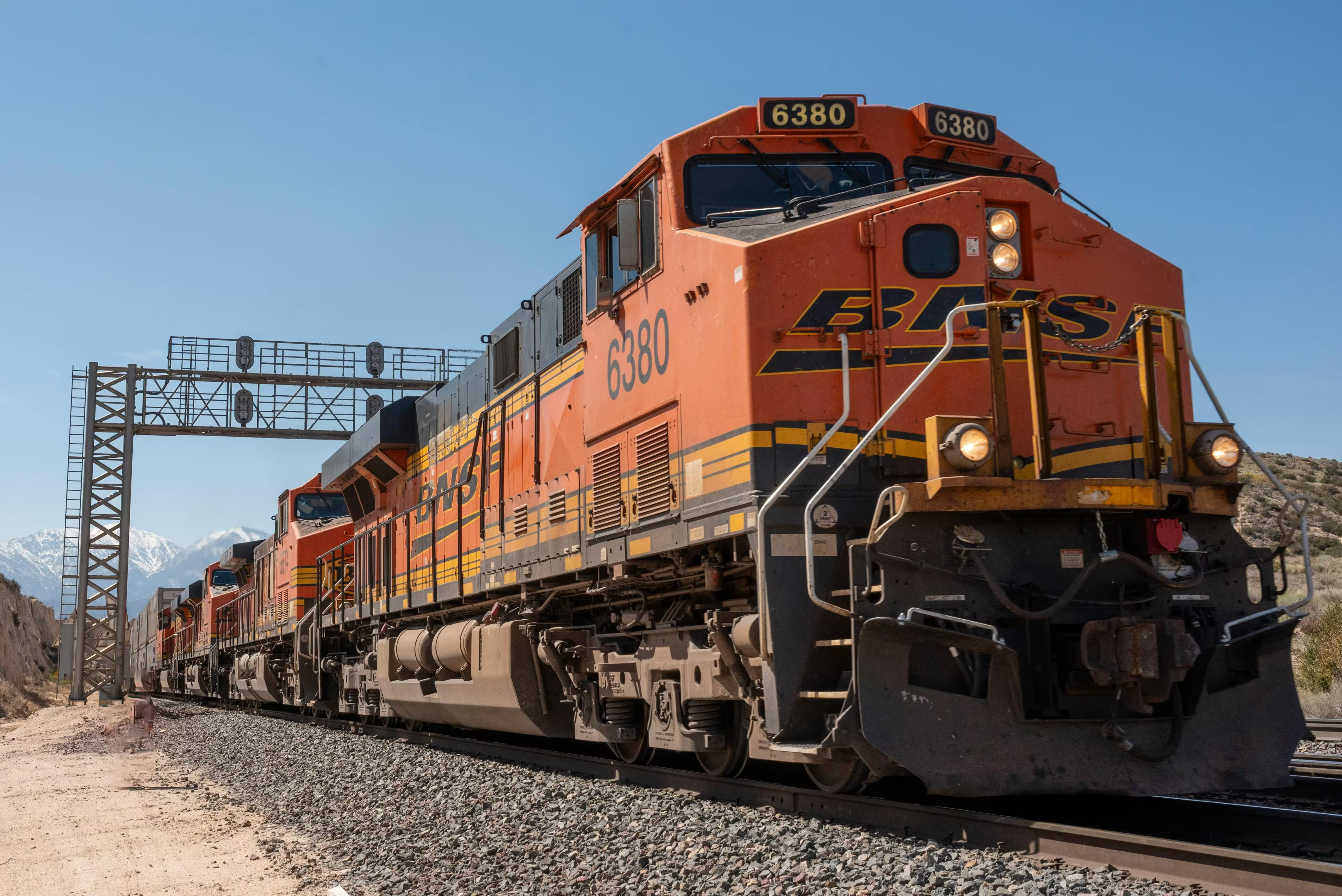
Rail networks run on tight schedules, and a locomotive pulled for unplanned maintenance affects every train behind it. ELIMFILTERS® protection systems are engineered for the vibration, thermal cycling, and extended duty cycles of passenger and freight locomotives, helping maintenance teams plan service instead of reacting to failure. Our distributors support the maintenance depots and rail operators that keep networks moving on schedule.
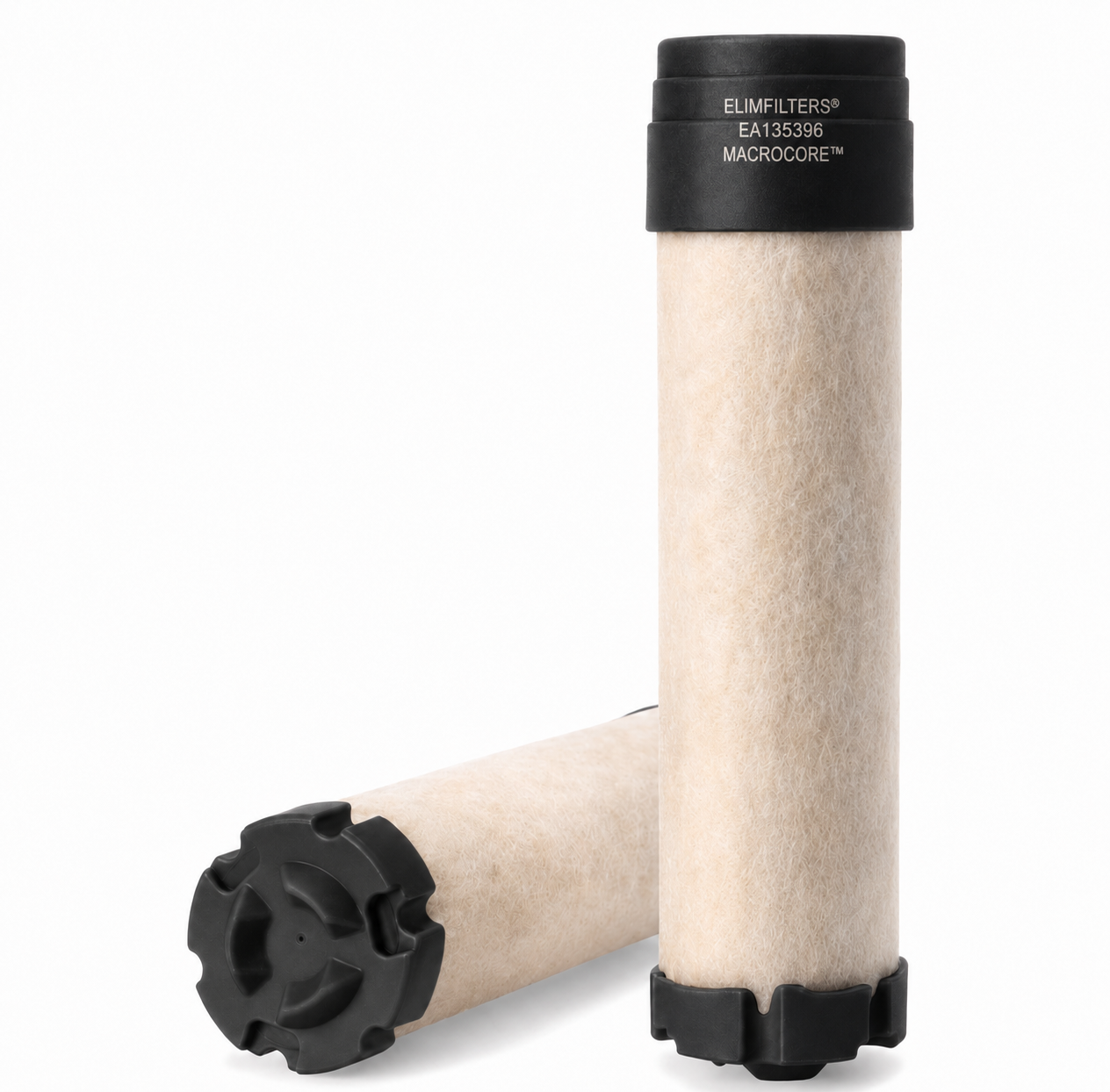
Primary air elements are the main contamination barrier protecting the combustion chamber from particulate ingestion. MACROCORE™ progressive-density media distributes contaminant loading through the full media depth while balancing efficiency, capacity, and restriction.
View Primary Air →FLEET AVAILABILITY
Filtration supports more than the component. It helps protect the engine, fuel path, service plan and fleet allocation decisions surrounding the asset.
A locomotive removed from service can affect fleet allocation, consist planning and the operating schedule around it.
Air, fuel and lubricant cleanliness support the protected interfaces that must operate across long duty cycles.
Particulate and water control matter from storage and transfer through final engine supply, not only at the last filter position.
Correct part identification before a scheduled service event reduces the risk of losing maintenance time to an avoidable mismatch.
Filtration helps protect injectors, pumps, bearings, turbochargers and applicable hydraulic components from contamination exposure.
A governed contamination-control path supports more consistent maintenance planning across mixed locomotive and support-equipment populations.
FROM LOCOMOTIVE TO PART
Identify the locomotive, multiple unit, auxiliary power unit or maintenance equipment.
Confirm the engine and the exact air, fuel, lubrication or hydraulic filter position.
Define operating hours, load, route dust, vibration, ambient conditions and maintenance access.
Match the contamination mechanism to the protected system and service requirement.
Validate the final filter using OEM reference, dimensions and documented application evidence.
DEPOT APPLICATION EVIDENCE
Final identification should reconcile the known reference, locomotive and engine context, dimensions, protected system and operating conditions before the scheduled service event begins.
RAILWAY FILTRATION QUESTIONS
Air intake, fuel and water separation, lubrication and selected hydraulic systems are common protection priorities on locomotives and rail-support equipment. The correct combination depends on the asset, engine, protected system, route exposure and duty cycle.
Rail equipment combines extended duty, vibration, thermal cycling, route dust, depot fuel handling and scheduled maintenance constraints. Filtration should therefore be selected around the actual locomotive or rail asset rather than assumed from a general heavy-duty category.
Particulate or water can enter through bulk storage, tank breathing, condensation, transfer equipment and depot refueling. The protection strategy should consider the complete fuel path from storage to the engine.
Locomotive air systems can be exposed to route dust, ballast particulate and changing ambient conditions. Air-intake selection should account for loading, sealing, engine requirements and the actual operating environment.
No. A fixed interval does not describe contamination loading, fuel quality, engine configuration, route exposure, sealing condition or maintenance access. Service planning should reflect the actual application.
Use the locomotive or rail asset, engine, protected system, duty cycle, route environment, OEM or current filter reference, dimensions when available and validated application evidence.
Yes. If an OEM reference or current filter number is known, Part Search provides the fastest route to cross-reference and application information. For engineering review, include the locomotive or asset, engine, protected system and operating conditions.
Standardization should follow confirmed compatibility at the engine, system and part level. Similar locomotive classes or duty profiles do not by themselves establish interchangeability.
HAVE A LOCOMOTIVE OR RAIL APPLICATION TO RESOLVE?
Send the locomotive or rail asset, engine, protected system, route conditions and any known OEM or current filter reference.
IDENTIFY MY RAIL PROTECTION PATH