Stored Fuel
Standby assets may sit for long periods while fuel is exposed to storage time, tank breathing, condensation and transfer contamination.
DIRECT ANSWER
Power-generation filtration starts with the generator set and its readiness requirement, then resolves stored-fuel condition, protected system, standby or prime-power duty, environmental exposure, maintenance access and validated application evidence. A filter should not be selected from running hours or generator category alone.
READINESS BEFORE RUNTIME
Power-generation protection is unusual because the critical event may happen after long periods of low utilization. Stored fluids, environmental exposure and maintenance condition continue to matter while the hour meter barely moves.
Standby assets may sit for long periods while fuel is exposed to storage time, tank breathing, condensation and transfer contamination.
A generator can spend most of its life waiting, then be required to accept load immediately when utility power is unavailable.
Cooling-system condition becomes critical once the engine moves from standby to sustained load and heat rejection increases rapidly.
Prime-power and emergency sets can move between low utilization, testing and extended operation, changing filtration demand across the same asset.
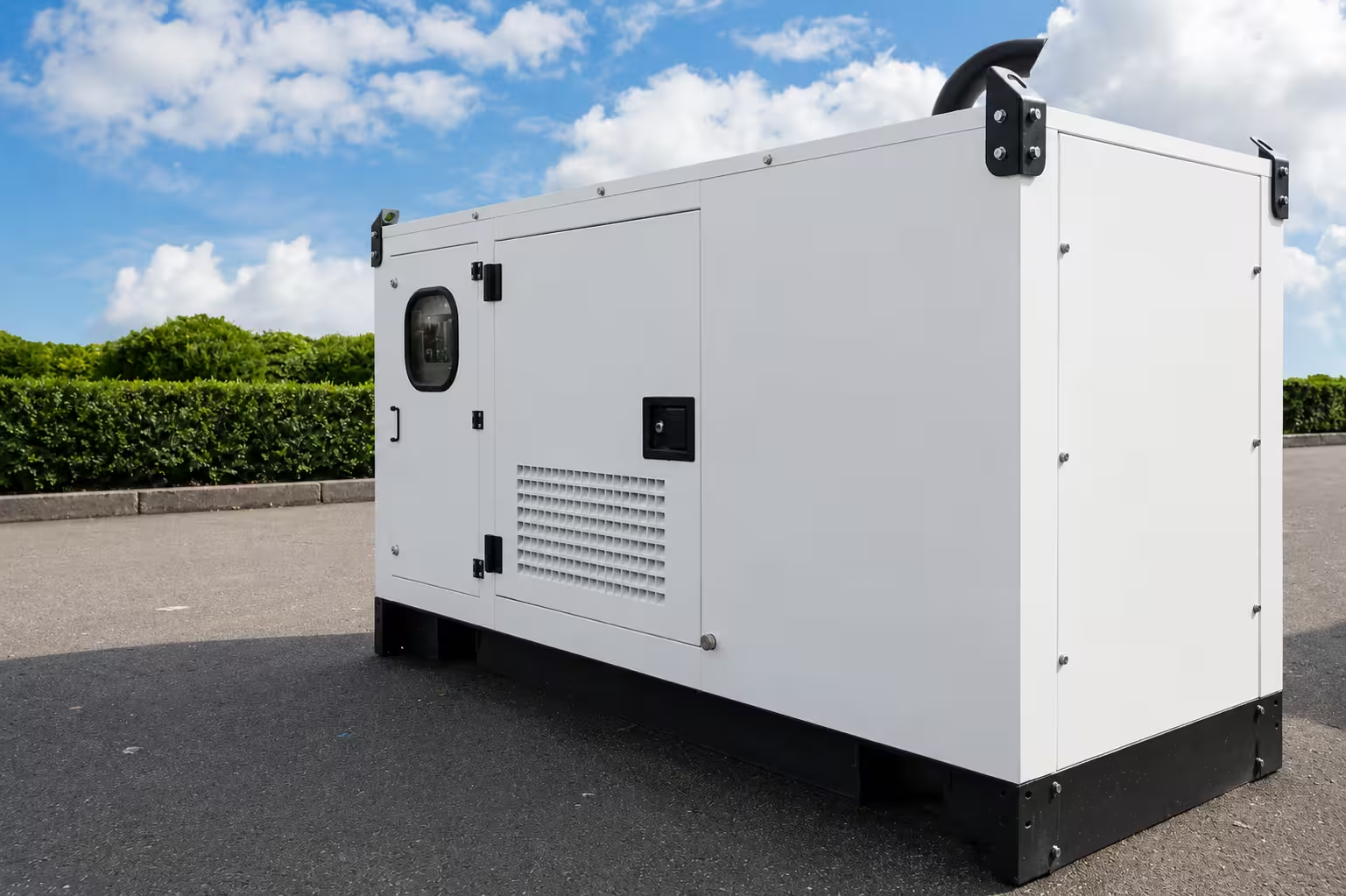
A hospital standby set, a remote prime-power unit and an industrial emergency generator may share similar engines while operating under very different fuel-storage, testing, loading and maintenance conditions.
READINESS PATHWAYS
Selection should move from contamination source to protected system, then to the appropriate ELIMFILTERS technology and finally to a validated part.
Stored fuel + tank breathing + condensation + transfer
Ambient dust + enclosure ingress + engine air demand
Wear debris + soot + oxidation byproducts + service ingress
Scale + corrosion debris + fluid degradation + service contamination
A generator filter decision must resolve readiness duty, stored-fluid condition, protected system, environmental exposure and application evidence before the product number is accepted.
Standby power can spend long periods waiting and then be required to carry load immediately. ELIMFILTERS® protection systems are designed to support fuel, air, lubrication and cooling-system cleanliness across stored readiness, routine testing and sustained generator duty. Product selection should reflect the actual generator set, duty profile, stored-fluid condition and validated application evidence.
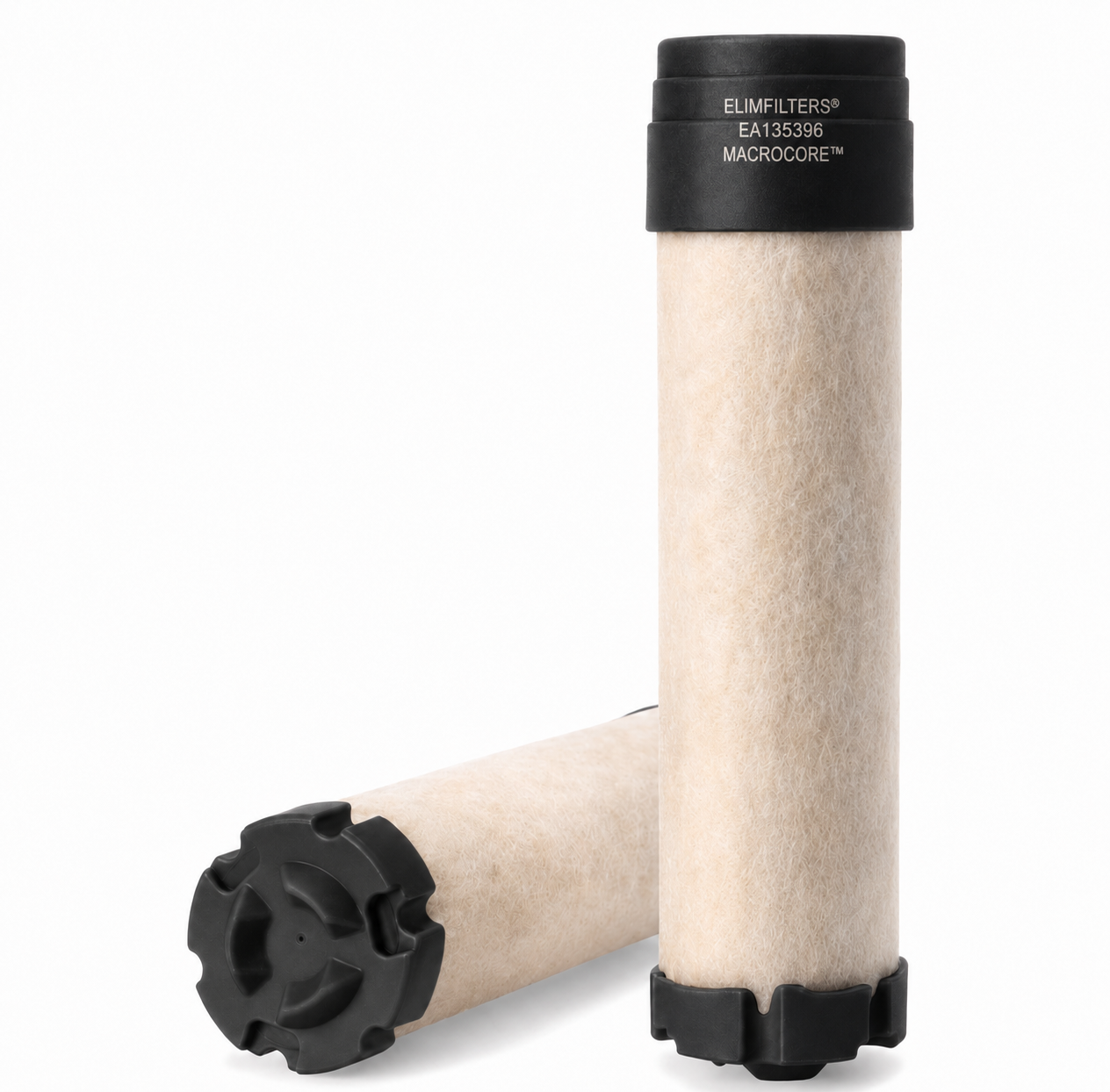
Primary air elements are the main contamination barrier protecting the combustion chamber from particulate ingestion. MACROCORE™ progressive-density media distributes contaminant loading through the full media depth while balancing efficiency, capacity, and restriction.
View Primary Air →POWER AVAILABILITY
For standby and emergency systems, the relevant question is not only whether the engine can run. It is whether the complete generating asset is ready to start, stabilize and carry the required duty when the site loses normal power.
Fuel, air and lubrication condition influence whether the engine can transition from standby to stable operation when demanded.
A generator must move from start-up into electrical load without contamination-related restrictions compromising protected engine systems.
Stored-fuel contamination can reach pumps and injectors before an emergency event exposes the weakness.
Cooling-system cleanliness supports controlled heat rejection during sustained generator load.
Inspection and service decisions should be completed before an outage turns maintenance access into an operating constraint.
The filtration strategy supports the larger requirement: keeping the generating asset ready to deliver power when the facility depends on it.
FROM READINESS CONDITION TO PART
Identify the generator set, engine family and protected subsystem.
Define standby, emergency, prime-power or continuous operating responsibility.
Assess fuel storage, fluid age, environment, testing frequency and contamination exposure.
Match the contamination mechanism to fuel, air intake, lubrication or cooling-system protection.
Validate the final filter using OEM reference, dimensions and documented application evidence.
APPLICATION EVIDENCE
Final identification should reconcile the known reference, generator-set or engine context, dimensions, protected system and operating responsibility. Where evidence is incomplete, the application should remain under review rather than be treated as confirmed.
POWER GENERATION FILTRATION QUESTIONS
Fuel and water separation, air intake, lubrication and cooling-system protection are common priorities on diesel generator sets. The correct priority depends on whether the unit is standby or prime power, fuel-storage conditions, environment, engine configuration, duty profile and maintenance access.
A standby generator can remain idle for long periods while fuel, fluids, seals and environmental exposure continue to change. When called, the asset may have to start and accept load immediately. Filtration and maintenance planning should therefore account for stored-fluid condition and readiness, not only running hours.
Fuel can acquire particulate or water through bulk storage, tank breathing, condensation, transfer equipment, maintenance activity and extended storage. The protection strategy should consider the complete fuel path before fuel reaches sensitive pumps and injectors.
Generator engines can move rapidly from standby to sustained thermal load. Cooling-system contamination, scale, corrosion debris or degraded fluid condition can interfere with heat transfer and system stability, so coolant protection should be treated as part of asset readiness.
No. Running hours do not capture stored-fuel condition, calendar aging, environmental dust, fluid degradation, standby duration, testing frequency or the consequences of an emergency start. Selection and service planning should reflect the actual duty profile.
Use the generator-set or engine model, protected system, standby or prime-power duty, fuel-storage conditions, environment, OEM or existing part reference, dimensions when available and validated application evidence.
Yes. If an OEM reference or current filter number is known, Part Search provides the fastest route to cross-reference and application information. For an engineering review, include the generator set, engine, protected system and operating duty.
HAVE A GENERATOR OR READINESS PROBLEM?
Send the generator set or engine, protected system, standby or prime-power duty, fuel-storage conditions and any known OEM or filter reference.
IDENTIFY MY GENERATOR PROTECTION PATH