Abrasive Dust
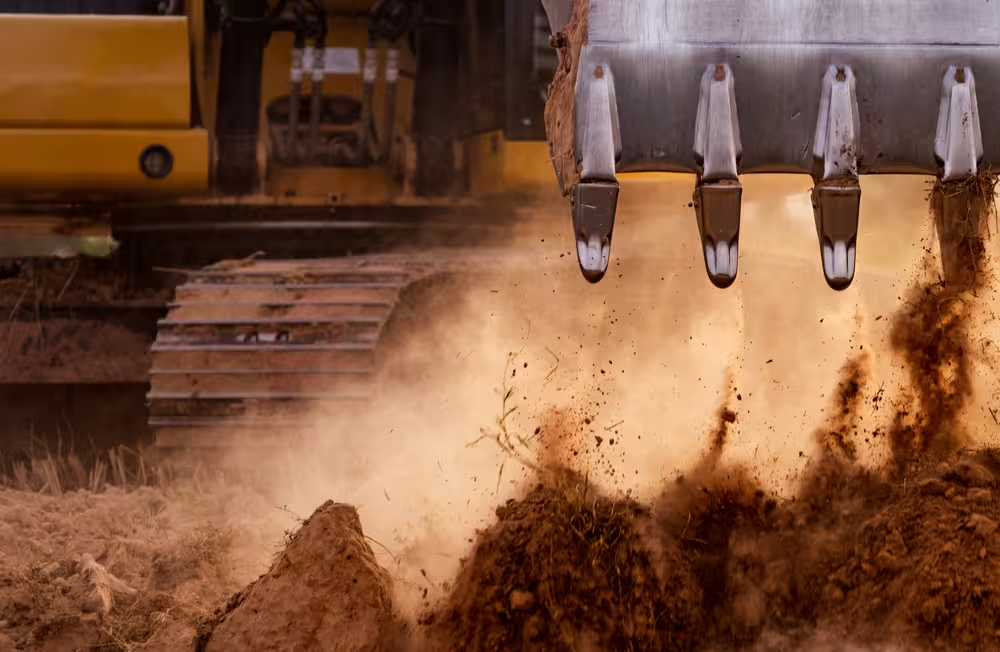
Open-pit and underground operations continuously expose air-intake systems to fine mineral dust. Loading rate, particle size and service conditions determine how quickly restriction and contamination risk develop.
WHY MINING CHANGES FILTRATION
A mining machine combines abrasive airborne contamination, high hydraulic demand, field fuel handling and extended duty cycles.
The operating environment establishes the context; component sensitivity, contamination mechanism, service interval and maintenance reality complete the decision.
Open-pit and underground operations continuously expose air-intake systems to fine mineral dust. Loading rate, particle size and service conditions determine how quickly restriction and contamination risk develop.
Excavation, loading, drilling and haulage depend on high-pressure hydraulic systems. Ingress, wear debris and service practices can compromise pumps, valves, actuators and precision control surfaces.
Bulk storage, transfer, field refueling and moisture exposure can introduce particulate and water contamination before fuel reaches sensitive engine interfaces.
Long operating hours, vibration, thermal load and production pressure make filtration capacity, service discipline and maintenance access part of the protection decision.
The same mine can place completely different demands on a haul truck, excavator, drill rig and processing asset. Equipment type narrows the protection problem before a product number is considered.
CONTAMINATION PATHWAYS
Mining contamination begins in the operating environment. Each pathway connects a contamination source to the system at risk and then to the ELIMFILTERS technology engineered for that protection need.
The correct filtration strategy is not determined by machine type alone. Dust loading, fluid cleanliness requirements, fuel handling, duty cycle, service interval and component sensitivity determine the protection architecture.
Mining operations run on machines that cost more per hour of downtime than almost any other industry. ELIMFILTERS® protection systems are built to hold up under constant dust loading, vibration, and extreme duty cycles, so contamination does not turn into an unplanned failure. Working through a global distributor network, we make sure the right protection system is available where the equipment actually operates, not just where it was purchased.
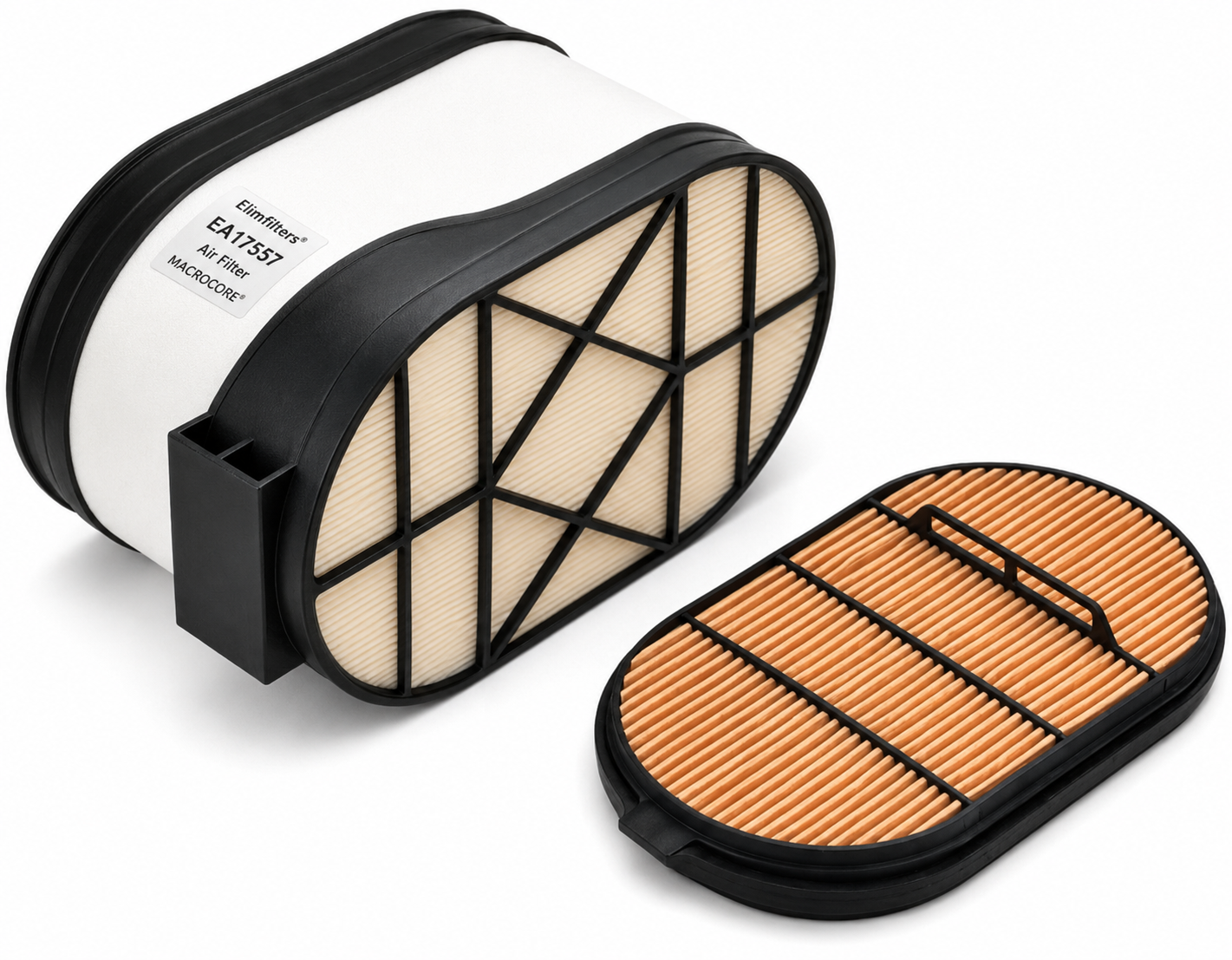
Primary air elements are the main contamination barrier protecting the combustion chamber from particulate ingestion. MACROCORE™ progressive-density media distributes contaminant loading through the full media depth while balancing efficiency, capacity, and restriction.
View Primary Air →WHAT CONTAMINATION PUTS AT RISK
In mining, contamination can affect airflow, hydraulic cleanliness, fuel-system integrity, thermal control and overall equipment availability across the operating chain.
Limit abrasive contamination at bearings, pumps, valves and other precision interfaces.
Manage particulate loading before rising restriction changes airflow or service demand.
Protect pumps, valves, actuators and control surfaces around the required fluid cleanliness.
Control particulate and water contamination across storage, transfer and field refueling.
Keep contamination from becoming an additional burden on cooling surfaces and heat rejection.
Reduce avoidable contamination events that can remove productive assets from service.
AVAILABILITY & TOTAL COST OF OWNERSHIP
Mining filtration should be judged against component sensitivity, maintenance consequence and equipment availability—not filter price alone.
A practical protection hierarchy separates long-life asset structures, high-value serviceable components and consumable protection elements. The categories show why a relatively low-cost filtration element can matter to much higher-value interfaces.
Frames, housings, major castings and structural assemblies intended to remain with the machine for long periods.
Turbochargers, injectors, pumps, valves, transmissions, final drives and other assemblies with significant service consequence.
Filters, seals and service fluids replaced through the lifecycle to control contamination before it reaches sensitive interfaces.
FROM MACHINE TO PROTECTION
Identify the asset, engine and critical systems.
Define dust, water, fuel, debris and environmental contamination.
Establish load, operating hours, service access and maintenance interval.
Connect each contamination mechanism to the correct filtration system and technology.
Resolve the final product through OEM reference, dimensions and application evidence.
MINING FILTRATION QUESTIONS
The priority depends on the machine and duty cycle, but mining equipment commonly requires coordinated protection across air intake, hydraulic, fuel and lubrication systems. Each system faces a different contamination mechanism, so selection should be based on the protected asset and operating conditions rather than the industry label alone.
Abrasive mineral dust increases loading on the air-intake system. If contamination reaches protected engine interfaces, it can contribute to wear and loss of performance. Air-cleaner capacity, restriction growth, sealing integrity and service practice therefore matter together.
Dust can contribute to abrasive wear, rising restriction, impaired heat rejection and interference with sensors or exposed control components. The dominant mechanism depends on where contamination enters, which system carries it and which interface is vulnerable.
Mining hydraulic systems rely on pumps, valves, actuators and control surfaces operating under high load. Contamination can interfere with those precision interfaces, so hydraulic filtration must be selected around fluid cleanliness requirements, system sensitivity, operating pressure and service conditions.
Contamination can enter through bulk storage, transport, transfer equipment, field refueling, tank breathing and moisture exposure. For mining operations, fuel protection should therefore consider the complete handling path rather than only the final filter installed on the equipment.
Filtration affects more than consumable cost. Contamination control influences component wear, service frequency, maintenance predictability and equipment availability. The relevant economic question is therefore what high-value component and operating consequence the filtration strategy is protecting.
No. The equipment may share filter categories, but dust loading, ventilation, moisture, temperature, duty cycle, access and maintenance conditions can differ substantially. Those variables change the protection architecture and service strategy.
Yes. If the OEM reference or current filter number is known, Part Search provides the fastest path to cross-reference and application information. For an engineering review, the machine, protected system and operating environment should also be provided.
HAVE A MACHINE OR CONTAMINATION PROBLEM?
Send the machine, engine, protected system, operating environment and any known OEM or filter reference. We will route the request through the correct protection path.
PROTECT MINING EQUIPMENT