Pre-season
Inspection, fluid condition, sealing integrity and filter readiness before equipment enters critical field duty.
DIRECT ANSWER
Effective agricultural filtration connects the machine, seasonal duty, contamination source, protected system and service window to a validated filter application. The path is machine → field condition → contamination mechanism → protection system → ELIMFILTERS technology → verified part.
SEASONAL UPTIME
Agriculture concentrates risk into short operating windows. A filter decision that is acceptable during light service may be inadequate once dust loading, crop residue, heat and operating hours increase together.
Inspection, fluid condition, sealing integrity and filter readiness before equipment enters critical field duty.
Dust, long operating hours and hydraulic demand increase while schedule flexibility narrows.
Service discipline must account for changing field conditions, heat, residue and fuel handling.
High particulate load and limited downtime make contamination control part of production continuity.
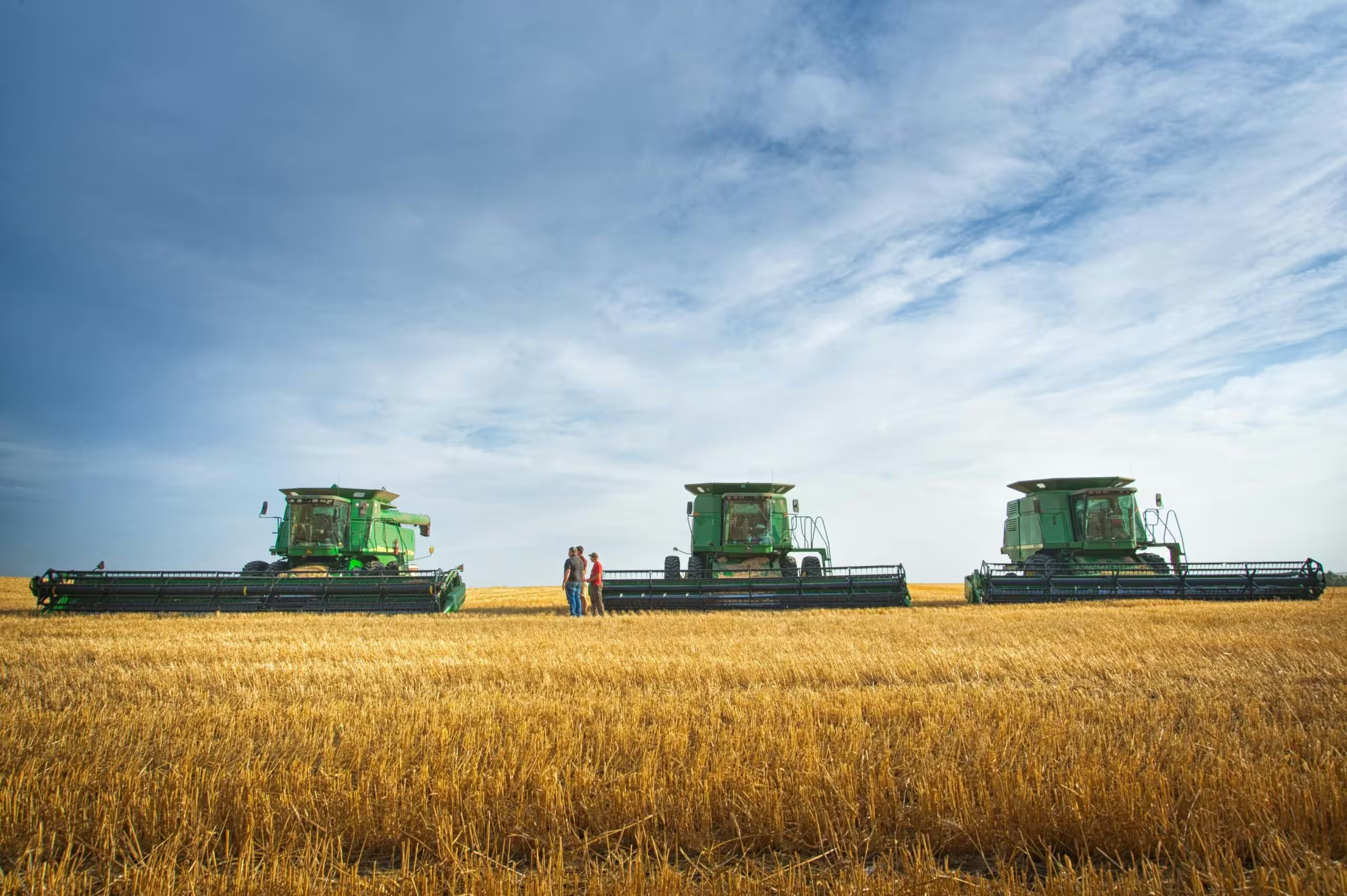
A tractor, combine, sprayer and irrigation engine may work on the same farm but face very different contamination loads, service access and operating intensity.
FIELD EXPOSURE
The useful question is not simply which filter fits the machine. It is where contamination enters, which system is exposed and what component must remain protected through the seasonal duty cycle.
Airborne particulate and residue
Ingress, wear particles and service contamination
Bulk storage, transfer and seasonal handling
Wear debris, soot and service ingress
Dust, pollen and organic airborne debris
Agricultural filtration should be selected around the field environment, machine duty, contamination source, protected system and service window—not by equipment category alone.
Planting and harvest windows do not wait for equipment repairs. ELIMFILTERS® filtration technology is engineered to extend service intervals and protect fuel and lubrication systems through heavy dust and long operating hours, which translates into better fuel efficiency and less time in the shop when the season matters most. Less downtime means more productive hours in the field and a lower total cost of ownership across the equipment’s working life.
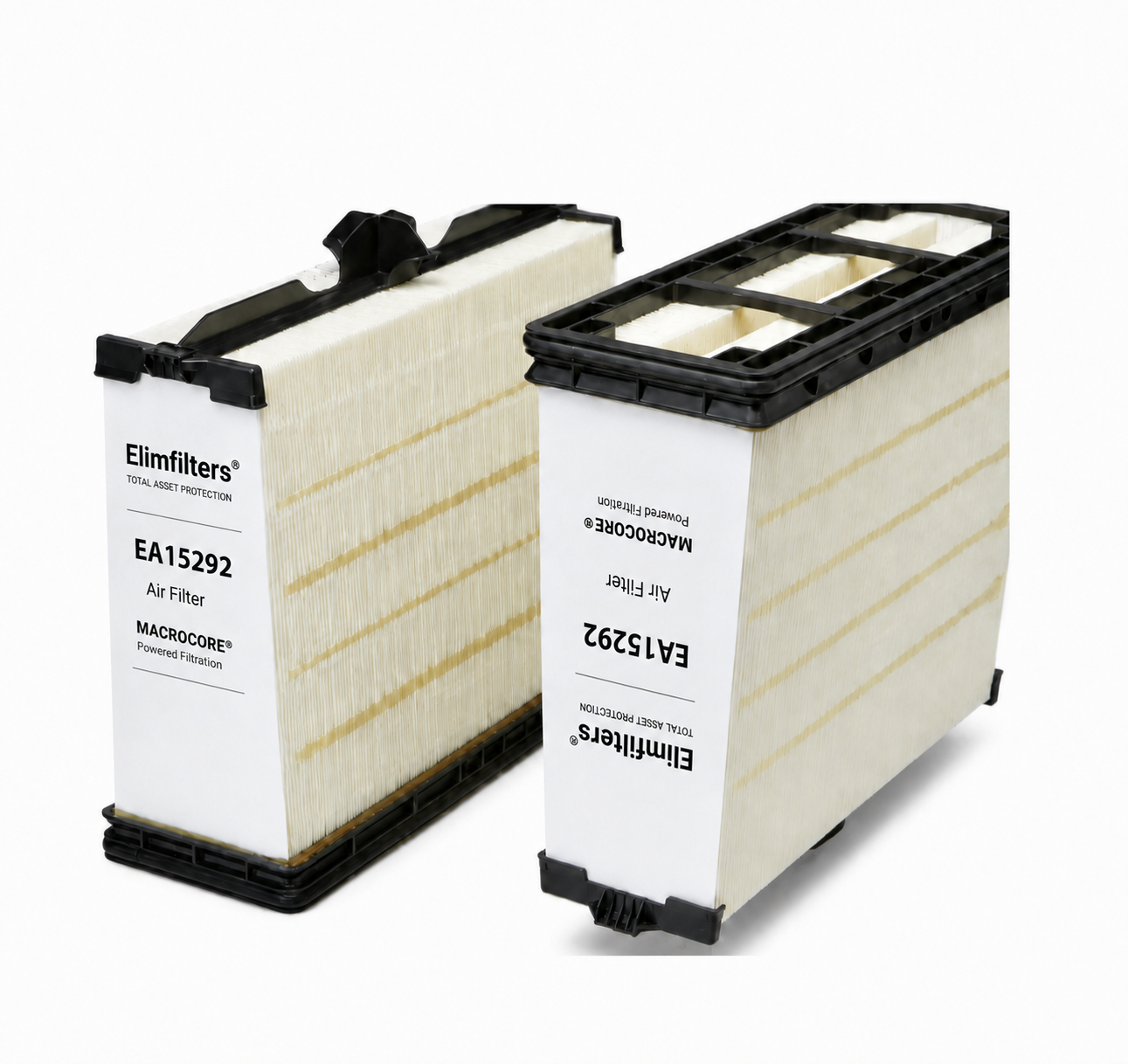
Primary air elements are the main contamination barrier protecting the combustion chamber from particulate ingestion. MACROCORE™ progressive-density media distributes contaminant loading through the full media depth while balancing efficiency, capacity, and restriction.
View Primary Air →FIELD CONTINUITY
Control dust and organic debris before rising restriction changes engine breathing or service demand.
Protect pumps, valves and actuators that support steering, lifting, implements and precision controls.
Control particulate and water introduced through bulk storage, transfer and field refueling.
Limit contamination that can accelerate wear across bearings and other lubricated interfaces.
Manage cabin particulate where enclosed equipment operates in dust, pollen and crop residue.
Use operating conditions and contamination load to plan service around real field demand.
FROM FIELD CONDITION TO PART
Identify the tractor, combine, sprayer, irrigation engine or support asset.
Define dust, crop residue, moisture, fuel handling, heat and operating intensity.
Establish seasonal hours, loading, service access and maintenance window.
Determine whether the primary risk is air intake, hydraulic, fuel, lubrication or cabin air.
Confirm the final filter through OEM reference, dimensions and validated application data.
APPLICATION EVIDENCE
Use OEM reference, dimensional fit, protected system, machine context and operating evidence together. Part Search accelerates identification; engineering support resolves applications where the duty or contamination path needs additional review.
AGRICULTURAL FILTRATION QUESTIONS
Start with the machine and field environment, identify where contamination enters, determine which system and component must remain protected, then validate the final filter using OEM reference, dimensions and application evidence. The correct strategy is driven by duty and contamination exposure, not equipment category alone.
Planting and harvest concentrate long operating hours, dust exposure, crop residue and limited service windows into short periods. Filtration strategy should therefore account for seasonal duty, contamination load and maintenance access rather than relying on a generic calendar interval.
Air intake, hydraulic, fuel and lubrication systems are central to agricultural asset protection, while cabin air quality can also matter in enclosed operator environments. Priority depends on the machine, field conditions, duty cycle and protected component.
Fine soil dust and organic residue can increase loading on the air-intake system. Restriction trend, sealing integrity, element capacity and service practice should be considered together because contamination risk increases when dust bypasses the intended protection path.
Tractors, combines, sprayers and implements rely on pumps, valves, actuators and precision controls. Contamination can affect hydraulic response and component life, so filtration should be matched to system sensitivity, duty and service conditions.
Fuel can pick up particulate or water through bulk storage, transfer equipment, tank breathing, condensation and field refueling. The protection strategy should therefore consider the complete fuel-handling path before fuel reaches the engine.
No. A calendar or hour interval does not describe contamination loading by itself. Selection and service planning should also consider dust, residue, moisture, duty cycle, restriction trend, system sensitivity and the real maintenance window.
Use the machine, engine, protected system, field conditions, duty cycle and any known OEM or current filter reference. Dimensions and validated application evidence should confirm the final product selection.
Yes. If the OEM reference or current filter number is known, Part Search provides the fastest route to cross-reference and application information. For an engineering review, include the machine, engine, system and operating conditions.
HAVE A MACHINE OR FIELD-DUTY PROBLEM?
Send the machine, engine, protected system, field conditions, seasonal duty and any known OEM or filter reference.
IDENTIFY MY AGRICULTURAL PROTECTION PATH